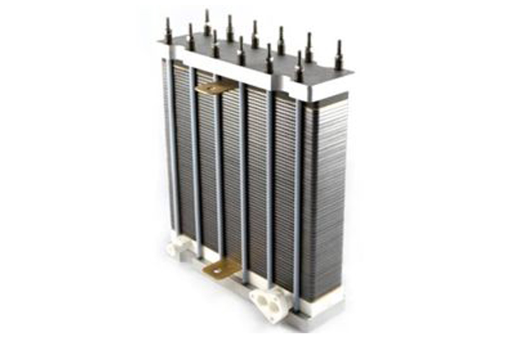
Research and development (R&D)
# Fuel Cell # Hydrogen # Battery # Graphite # 3D Printing Additive Manufacturing # 3D Metrology Inspection # Automation # Robots # Machine Learning # AI LLM # 5G
With us, science and practice go hand in hand. Through cooperation projects and networks with renowned universities, research institutes and industry partners, we translate the latest scientific findings into practical, industry-ready processes. In this way, we regularly create innovations for Germany as an industrial location and its industries of the future.
3D-4-H2
Further development of 3D printing technology for H2 applications
For the first time, a closely linked development of base material, 3D printing processes, and quality assurance methods for hydrogen applications is being aimed directly at fuel cell and electrolysis technology and tested and demonstrated as a supply chain. As a result, development and manufacturing activities related to these energy converters will be able to draw on a qualified regional infrastructure for producing key H2 components in the future.
IQ Control
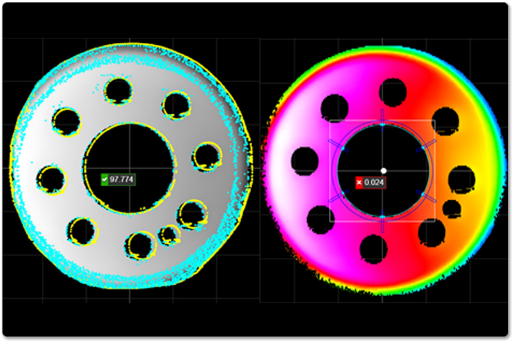
Realtime Quality-Inspection with 3D-Scanning at Inline-Production-Processes
Acquisition of real-time information of technical systems is becoming more and more important to companies all over the world. One of the biggest beneficiaries of transparent processes can be found amongst companies applying industrial production methodology. According to this demand, a 3d-scanning technology in combination with deep learning algorithms helps to overcome current problems at real-time quality control.
ITS DIGITIVE
Secure digital order processing for the productive use of 3D printing in value chains
3D printing has enormous potential to change future value creation patterns. Individualized products can be produced in small batch sizes with maximum component flexibility. These advantages really come into their own in 3D printing service networks. Service processes such as industrial repair benefit from short processing times and independence from the customer's location when procuring additively manufactured spare parts.
UPS fuel cell
Industrial power supply based on fuel cells with an additively manufacturable anode recirculation system
Fuel cell UPS systems offer high availability, are energy-efficient, can bridge longer power outages, require no air conditioning, and are free of pollutants. Today, however, fuel cell development is still usually separate from subsequent system development. This results in a complex system architecture based on a low-cost fuel cell, but which is very expensive as an overall system.